Tinley Park Epoxy Flooring has spent more than 20 years on epoxy-flooring in Riverdale and the rest of the south suburbs, and on every slab the first decision is what the concrete needs before it gets a coating. A garage or basement floor that looks ready on a walk-through often has cracks, chipped joints and a broken edge at the door that will show straight through a new finish. We map every one of those before we write a number down.
That map changes the price more than the color or the flake blend does. A hairline crack that has stopped moving takes a few minutes of filler, while a joint that still opens and closes needs a different material and a different plan for how it looks when the job is done. A slab that has broken apart past patching is not something we will coat at all.
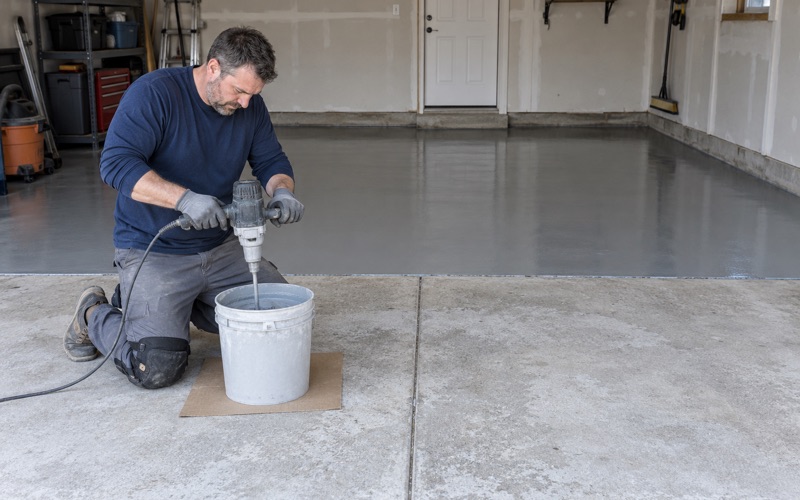
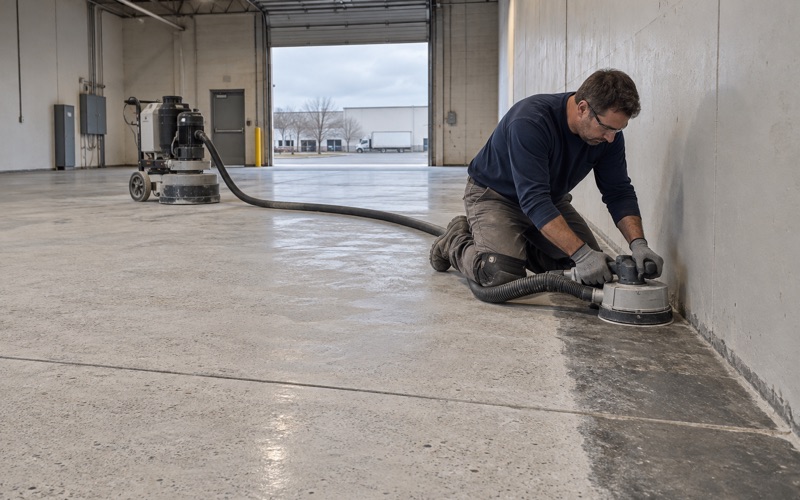
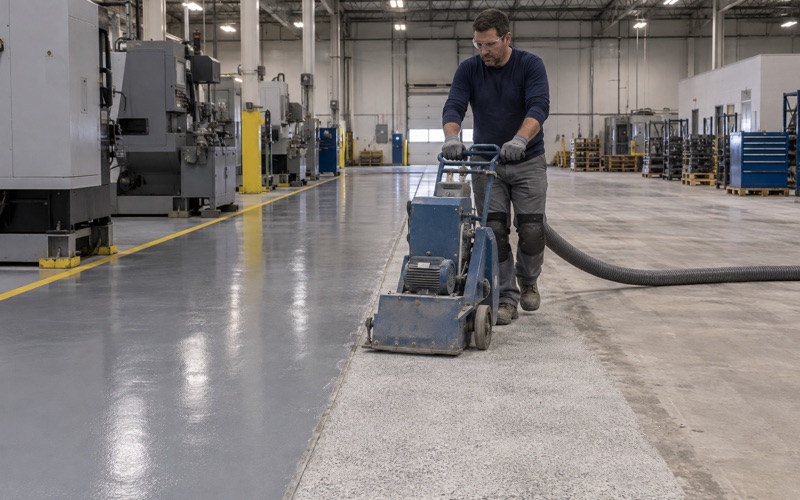
Our proposals spell out the product line, the coat count and the finished thickness, and every slab is opened with a diamond grinder or a shot blaster rather than an acid wash. A moisture test sits inside the written scope too, so the price you sign is the price for the floor you actually have.
Riverdale’s No-Permit List Ends Where Concrete Repair Ends
The Village of Riverdale publishes a short handout of work that can be done without a permit. On the concrete side it allows basic repair only, described as filling in cracks and or broken corners, and the same list covers installing floor coverings such as carpeting, floor tile and floor panels. Anything past that line goes through the village.
The same handout also allows painting interior or exterior walls and professional floor cleaning. None of those entries reach a resin floor system, which is why we read the concrete line narrowly. A coating that needs grinding, priming and several coats is a different kind of work from filling a crack.
What the handout covers and what it leaves out
The list does not name floor coatings, epoxy or sealers, so we do not treat a coating as automatically exempt. The handout itself tells residents to contact the Inspectional Services Department with questions, and that is the call we suggest before a coating is scheduled. It takes a few minutes and settles the question with the people who enforce the rule.
Inspectional Services works out of 725 W. 138th Street, and its general rule is that building permits are needed for improvements or repairs other than yard work and painting. The village’s own examples include garages, patios, additions, roofs and fences. A new garage slab or a poured patio is therefore a permit job, even though patching a crack in the old one is not.
Why that line shapes our scope
Because the no-permit work stops at cracks and broken corners, we build a Riverdale estimate around the same boundary. Crack filling and corner rebuilding are written as preparation inside the coating job. Anything that becomes slab removal, new concrete or a structural change is split off and named as separate work.
That split protects the owner as much as it protects the schedule. A quote that quietly folds new concrete into a coating price can turn a simple floor into an improvement nobody permitted. Keeping the two apart sends each part of the work to the right approval.
Looking for epoxy-flooring closer to Hickory Hills? See Epoxy-Flooring Services in Hickory Hills.
Static Cracks, Live Joints and Broken Edges
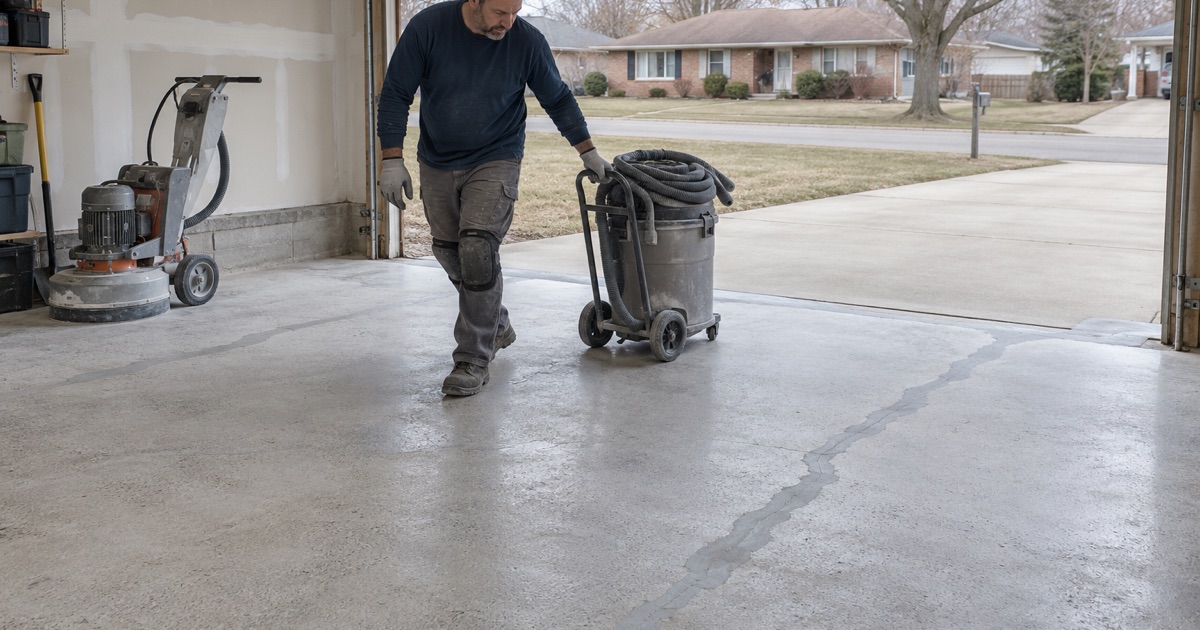
The crack filling the village allows is also the step that decides how long a coating lasts. Every coating is a thin film that follows the concrete underneath it, so whatever the slab does, the floor does too. Our job before the first coat is to sort each crack into the kind that has stopped and the kind that has not.
Static cracks get a rigid fill
A static, or dormant, crack has finished moving. We grind it open so the filler has clean sides to bond to, fill it with a rigid epoxy or polyurea crack filler, grind it flush and coat straight over it. Done that way, a dormant crack usually disappears under the finished floor.
Width, crack pattern, worn rather than freshly broken edges and the age of the slab all help us tell the two kinds apart. When the call is uncertain, the proposal says so. A crack we are not sure about is treated as one that still moves. Watching a crack for a season before coating is sometimes the honest answer.
A live joint stays a joint
A live joint is a control joint or a crack that still opens and closes with temperature and load. A rigid fill there will crack again, and the coating over it will crack along the same line. Instead we fill it with a semi-rigid or flexible joint filler and carry the joint up through the coating so the movement has somewhere to go.
That leaves a visible line in the finished floor, and we explain it before the job is sold rather than after. A coating cannot bridge a moving crack or stop a slab from moving. A clean, honored joint looks intended, while a coated-over live crack usually comes back as a jagged break.
Rebuilding broken corners at joints and the door
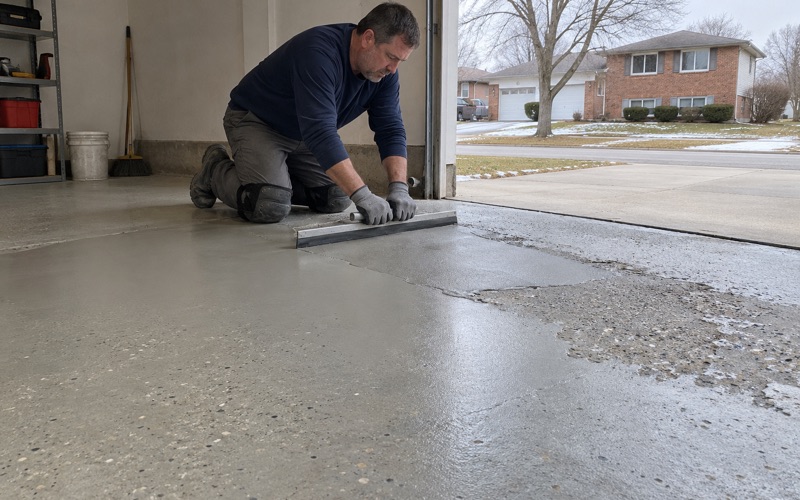
Broken corners show up where traffic crosses a joint and along the garage door edge, where tires, shovels and the door itself hit the slab. We cut back to sound concrete, rebuild the edge with a repair mortar and grind it to match the surrounding floor before any primer goes down. This is the broken-corner repair the village list describes, done as the base for a coating rather than a cosmetic patch.
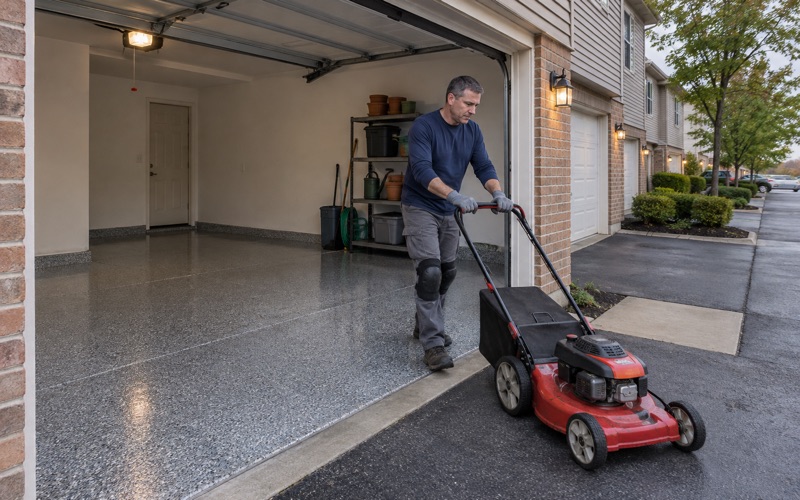
Skipping this step is a common reason garage coatings fail at the door first. A coating laid over a crumbling edge has nothing solid under it, and the first winter of brine and rock salt finds the gap. We choose garage systems for that salt load, but no system holds over an edge that was never rebuilt.
When the Slab Is a Concrete Job, Not a Coating Job
Some slabs are past what filling and patching can fix. Settled sections, heaved panels, wide cracks with one side higher than the other and large areas of crumbling surface all point to concrete work first. We would rather say that at the estimate than coat a floor that will fail anyway.
Signs we look for
A height change across a crack, a section that rocks underfoot or a surface that keeps powdering after grinding usually means the problem sits below the top inch. We note each one on the slab map that goes with the estimate.
Older housing raises the odds. In Riverdale 74.0 percent of housing units were built before 1970, so many garage and basement slabs have been in service for well over half a century.
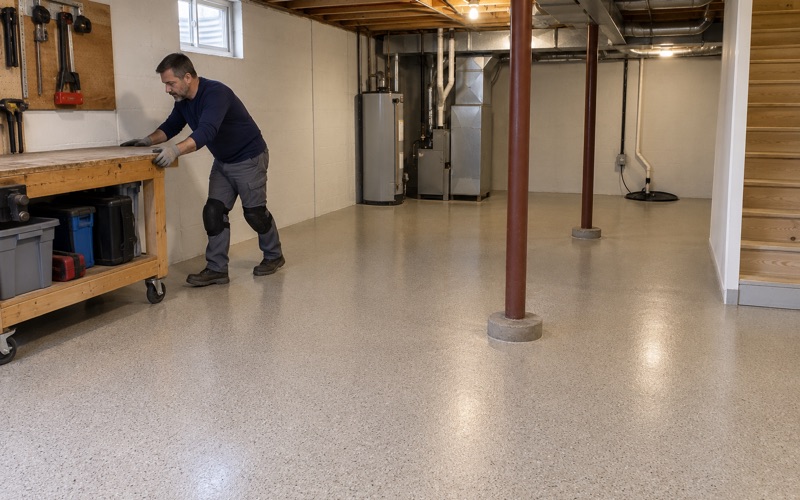
Basement floors bring their own check. The village names seepage and sewage in basements, and flooding north of 138th Street and east of School Street, among its known problems. A coating is not a water barrier and will not hold back seepage, so we test moisture and want the water source dealt with before a basement floor is coated.
Handing the slab back as a concrete job
When a slab needs replacement, we say so plainly and write the coating as a later phase. Pouring new concrete for a garage or patio falls under the permits Inspectional Services requires, so that work belongs with a concrete contractor who pulls the permit. Once the new slab has cured, we come back, test it and coat it.
New concrete changes our part of the work too. Fresh slabs hold a lot of moisture, and we follow the moisture readings, slab temperature and dew point rather than a fixed count of days. A coating rushed onto green concrete is exactly the moisture problem our warranty discussion names first.
Working in Riverdale: Registration, Bond and Insurance
Riverdale tells contractors directly what it expects of them. The Inspectional Services page says a contractor must be registered with the village to work in Riverdale and to obtain permits. Registration costs $175.00 and requires a surety bond and a certificate of insurance.
None of that is paperwork for its own sake. The bond and insurance give the village and the owner something to fall back on if a job goes wrong, and the registration tells Inspectional Services who is working on which property.
Checking the rules before the job is booked
Illinois has no state license for flooring or coating contractors, so the real rules sit at the village level and change from one village to the next. We check Riverdale’s registration, bond and insurance terms with Inspectional Services before a job here goes on the calendar. If the work calls for a permit, registration has to be in place first.
For any concrete contractor you hire for slab replacement, ask whether they are registered with the village and can show the bond and insurance. A permit application also carries a $35.00 filing fee at submission, with permit fees set at approval. Knowing that ahead of time keeps a combined concrete and coating project from stalling between the two trades.
Homes and business floors
Home jobs over the state threshold get a written contract and the Illinois consumer-rights pamphlet before any grinding starts. Grinding dust is pulled into a vacuum at the machine instead of being rinsed toward a floor drain. That keeps concrete slurry out of the village sewer lines. Products are chosen inside the Illinois VOC limits for floor coatings, which bind whoever applies them.
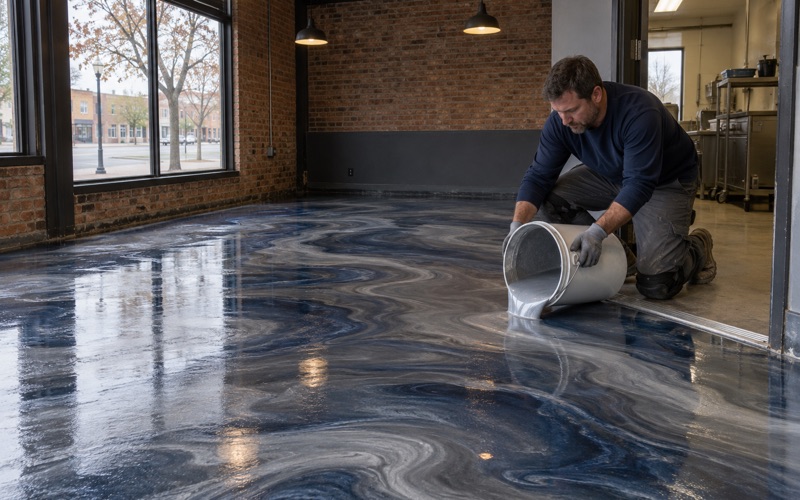
Business floors bring another reviewer. Inspectional Services reviews and inspects business premises, including health inspections, so a shop or food space owner should know what that inspection expects of the floor before choosing a system. When a space cannot close, we phase the work around opening hours with overnight and weekend windows.
- 20+ Years Coating Floors
- Moisture Test in Every Scope
- Free Written Estimates