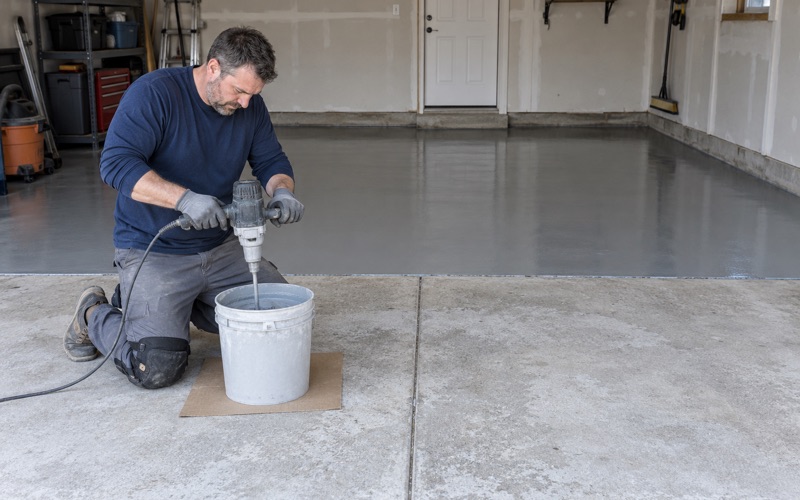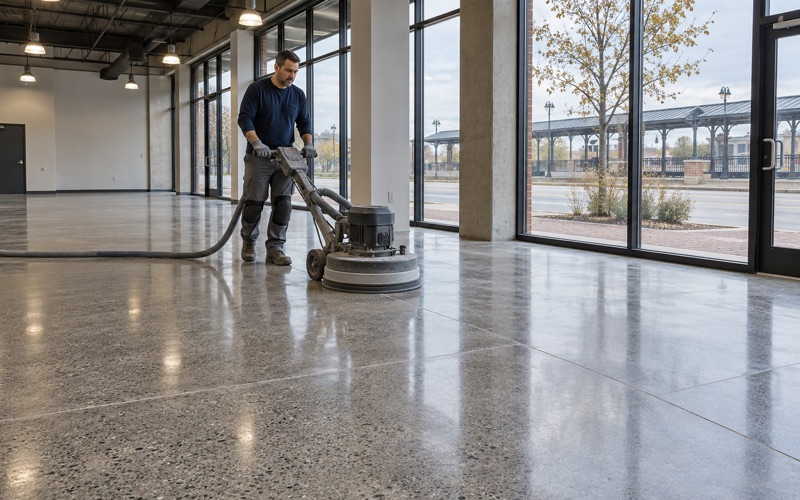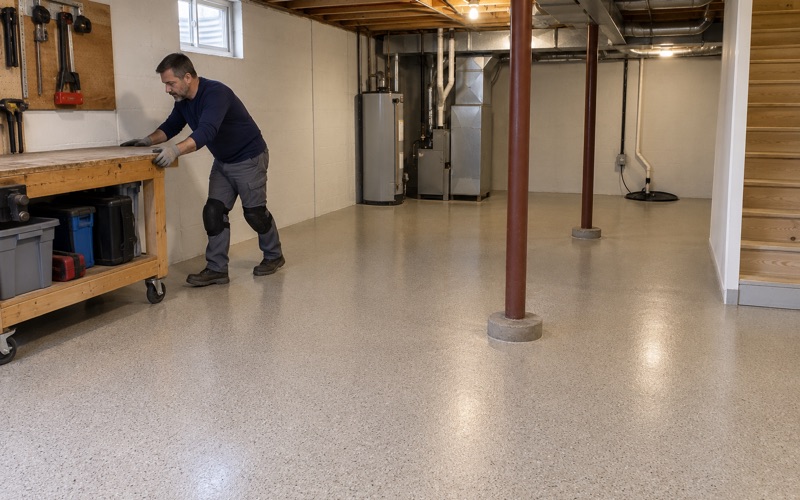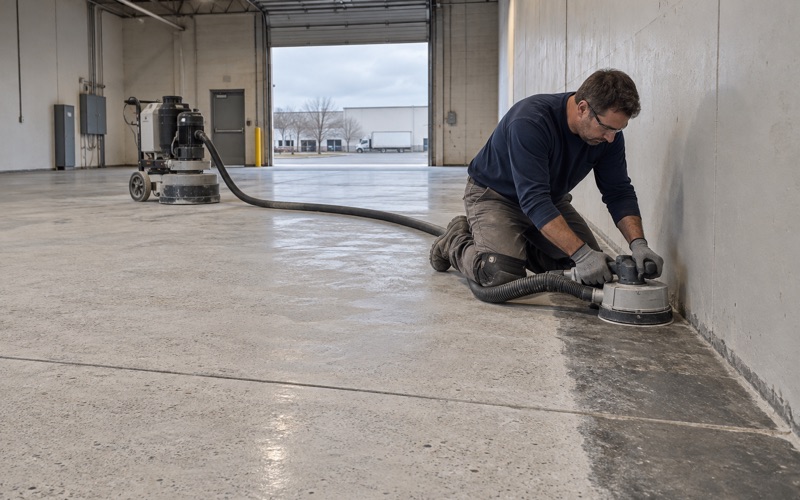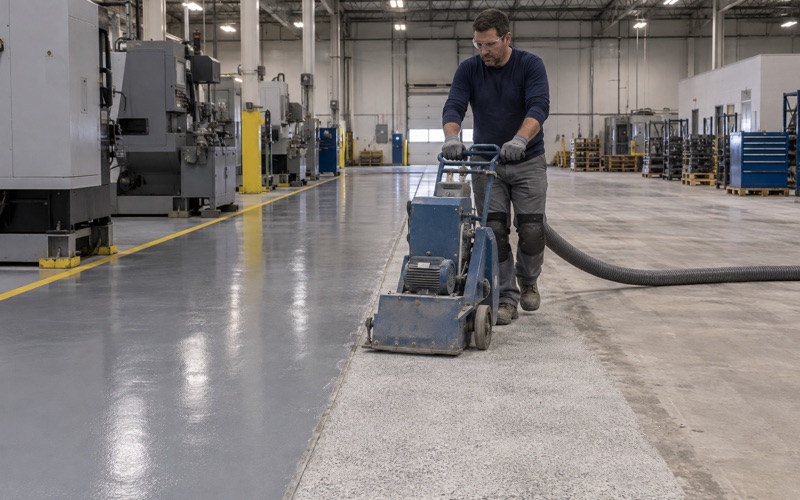
Tinley Park Epoxy Flooring has spent more than 20 years installing epoxy flooring in Matteson garages, basements, mudrooms and working rooms where the floor gets scrubbed hard and often. Our crews open every slab with a diamond grinder or a shot blaster rather than an acid etch, so the coating has a measurable profile to bond into instead of a surface that only looks clean.
Most of the floors we quote here are not showpieces. They are rooms where pets shed, boots drip and somebody mops the same corner twice a week. On floors like that, the color matters less than how the surface behaves under a bucket and a squeegee: whether rinse water sheets off or sits in a seam, and whether hair lifts away or packs into a crack.
That practical view shapes how we write a proposal. Before a price is final, the scope names the product line, the number of coats and the finished thickness, and it includes a moisture test. The floor you end up with can be checked against the paper you signed, line by line.
A 2022 Animal Campus on Central Avenue
The clearest local example of a floor that serves a cleaning routine is not a garage at all. In June 2022, Cook County celebrated the opening of the South Suburban Humane Society’s new shelter at 21800 Central Avenue in Matteson, a 19,000-square-foot building the county called the largest animal shelter in the Southland.
Room for 75 Cats and 60 Dogs
The campus has capacity for 60 dogs and 75 cats, an outdoor area with a pond, and a catio where cats can sit outside inside an enclosure. Its suites hold an adoption center, a resource center, a low-cost spay/neuter clinic and a low-cost veterinary clinic. Cook County Animal and Rabies Control awarded $7 million toward the project, 80 percent of its cost, and ground was broken in October 2020.
The society says it takes in more than 4,000 pets each year. A building turning over that many animals is cleaned constantly, and the cat side of any shelter carries one problem where the order of cleaning matters more than the strength of the chemical.
What We Know and What We Don’t
We have no relationship with the shelter, and we have not seen its floors or its written procedures. Everything below comes from published shelter dermatology guidance, not from anything inside that building on Central Avenue.
We raise it because the principle behind that guidance applies to any floor that sees heavy shedding. That includes plenty of floors in Matteson homes, where a dog crate sits in the garage or a long-haired cat sleeps by the back door.
Looking for epoxy-flooring closer to Midlothian? See Epoxy-Flooring in Midlothian.
Ringworm in Shelter Cats and Why Disinfectant Alone Falls Short
Ringworm is a fungal skin infection, not a worm, and in shelters the organism of most concern is Microsporum canis. Guidance from Karen Moriello, a veterinary dermatologist at the University of Wisconsin, explains that a culture-positive cat simply means infective spores were found on its hair coat. Kittens and medium- or long-haired cats are more likely to test positive.
Spores That Travel on Shed Hair
The spores ride on hair. A cat grooms, rubs against a cage door or curls up on a mat, and loose hair drifts to the floor carrying spores along with it. Once there, that hair gathers along edges, in corners and anywhere the surface is broken.
That is why ringworm control in a shelter is treated as cleaning the room as much as treating the animal. The hair on the floor is part of the problem, and a floor that holds onto hair holds onto the spores with it.
Hair and Debris Shield the Spores
Moriello’s slides are blunt on this point: there is no magic disinfectant, bleach included. Spores are protected from contact with disinfectants by dirt, debris and the hair shaft itself. Pour a strong product over a floor still carrying hair and grime, and much of it never reaches the spores underneath.
The same guidance calls aggressive, old-fashioned washing with a detergent the most valuable step in decontamination. The disinfectant comes later, and it only does its job on a surface that has already been cleaned down to the bare floor.
Where Hair Lodges on an Ordinary Slab
On bare concrete, hair and fine debris settle into the places a mop cannot reach: control joints, shrinkage cracks, spalled edges, the open pores of an unsealed surface and the grout lines of tile. Each of those spots also holds a little water, which slows the drying that the next step depends on.
None of this makes plain concrete dangerous. It just means a porous, jointed floor works against a careful cleaning routine instead of with it, and the person holding the mop pays for that every single time.
Sweep, Wash, Rinse, Dry, Then Disinfect: What the Floor Has to Allow
The sequence in the shelter guidance is easy to state. The room is swept, washed with detergent, washed again, rinsed with clean water and allowed to dry before the disinfectant goes on. The disinfectant then stays wet for the contact time on its label, which the guidance puts at five to ten minutes.
A Surface With Nowhere for Hair to Hide
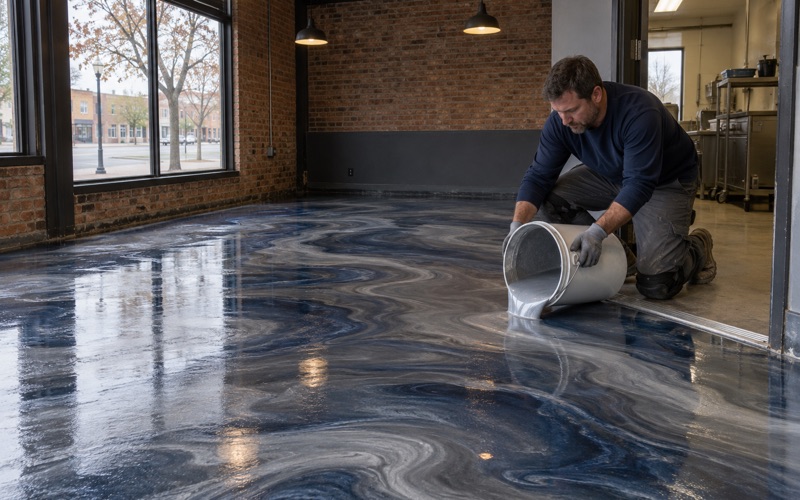
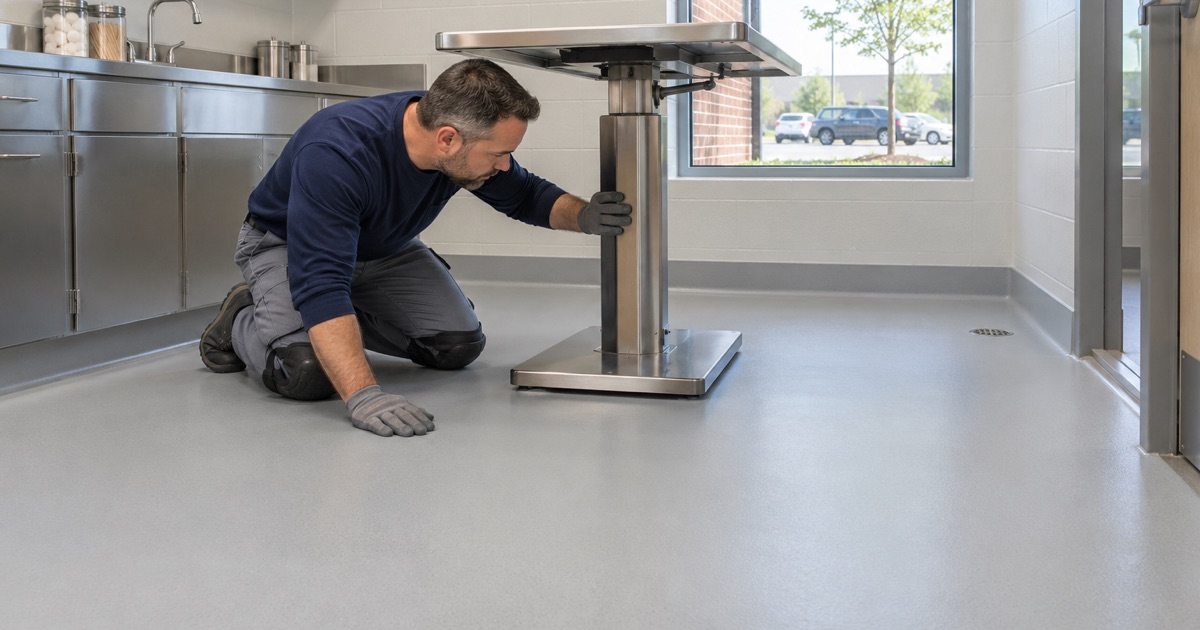
A seamless resinous floor answers the first half of that sequence. With joints and cracks filled before coating, and a cove carried up the wall where a room calls for one, hair and grit stay on top of the surface where a broom and a mop can lift them.
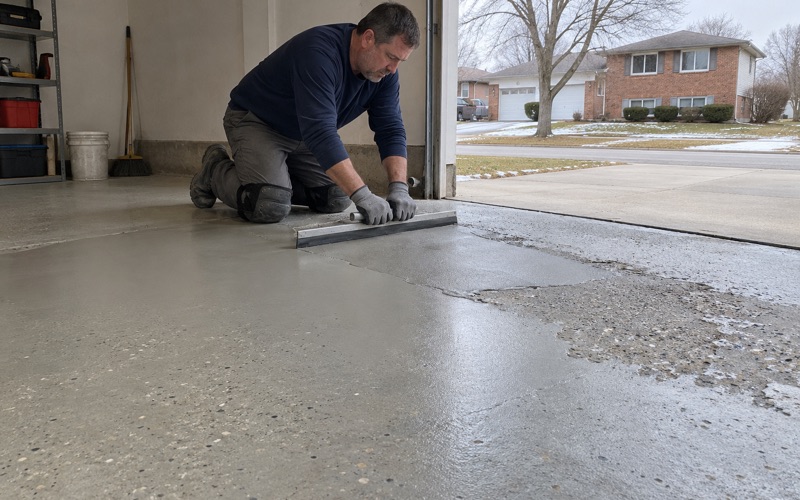
Getting there starts with an honest look at the slab. We map cracks, spalls and old coatings before quoting, and we say so plainly when a floor needs repair or replacement before it should be coated at all.
Drying Fast Between Steps
The rinse-and-dry step is where a porous floor costs the most time. Water soaks into unsealed concrete and wicks back out slowly, so the room stays damp long after the mop is put away.
A sealed 100% solids epoxy finished with a polyaspartic topcoat sheds rinse water to a squeegee instead of absorbing it. The surface dries far sooner, which lets the disinfectant land on a dry floor the way the guidance asks.
What a Coating Does Not Do
To be direct about it: a floor coating does not kill spores, and it does not replace any step of the cleaning protocol. We will not market any floor as a cure or a shield against infection.
What a well-built floor does is make each step of the routine easier to finish completely. That is the whole claim we make for it, in a shelter, a grooming room or a family garage.
Texture That Grips Without Trapping Hair
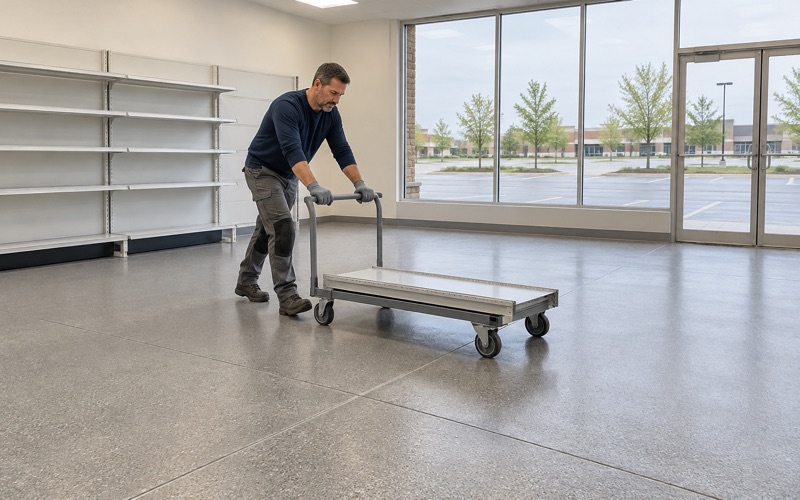
A wet floor still has to be safe underfoot. We specify slip resistance by the broadcast and the topcoat used, not as a slogan. A fine quartz aggregate broadcast locked under a topcoat gives grip, while a coarse, open texture can catch hair, so the texture is matched to how the room actually gets cleaned.
In a mudroom where a dog comes in wet, a vinyl flake broadcast under a clear topcoat is a common choice because it hides scuffs while staying easy to mop. The flake is fully encapsulated, so the surface hair falls on is the sealed topcoat, not the edge of a chip.
Shedding Pets at Home: The Same Order on a Garage or Mudroom Floor
Matteson has plenty of slabs that fit this conversation. Census figures count 5,193 detached homes and 936 attached units in the village, and 45.2 percent of its housing dates from 2000 or later. The 326 mobile homes in the village have no slab to coat, so floor coatings do not apply to them.
Those homes span a wide range of ages. A slab poured in the 2000s and one poured decades earlier can both take a coating well, but they rarely need the same preparation, which is why every quote here starts with a look at the actual floor.
Running the Shelter Sequence in a Garage
The order that works in a shelter works at home too. Sweep or vacuum the hair first, wash with a detergent, rinse, let the floor dry, and only then use whatever disinfectant your veterinarian recommends for your animals.
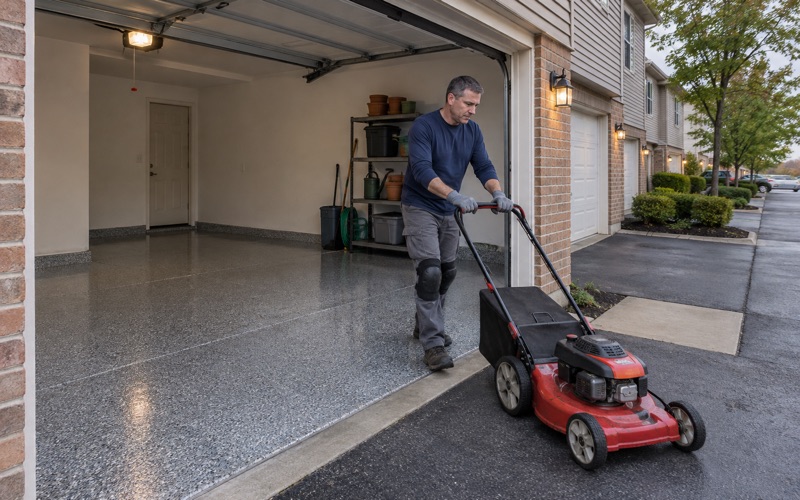
On a coated garage floor, hair lifts off the surface instead of packing into a saw-cut joint, and rinse water runs toward the door or the drain. Winter adds another layer, so the garage systems we install are chosen to hold up to the brine and rock salt that ride in on tires.
Moisture Comes Before Color
A coating sealed over a damp slab can blister or lift, and moisture is the first warranty exclusion we explain before any job is sold. We test before the price is final, using ASTM F1869 calcium chloride testing or ASTM F2170 in-situ relative humidity probes depending on the slab.
Where the readings run high, a moisture-mitigation primer goes into the written scope rather than showing up later as a surprise change order. That keeps the quote honest from the first visit.
Cure Timing and Grinding Dust
Cure schedules follow slab temperature and the dew point spread at the surface, not the calendar, so an unheated garage in deep winter is told to wait for warmer weeks. Grinding dust is captured at the machine with a vacuum and never rinsed toward a floor drain or a storm inlet.
Dust left behind causes trouble of its own. Fine concrete powder left on a slab weakens the bond of the first coat, so the ground surface is vacuumed clean and checked before any primer is mixed.
Permits and Paperwork in Matteson
Matteson sits entirely within Cook County, and contractor licensing, permits and inspections run through the village’s Building Services office in Community Development. Illinois has no state flooring license, so we confirm the village’s own license, bond and insurance terms before booking. Home jobs over the state threshold get a written contract and the Home Repair: Know Your Consumer Rights pamphlet before any grinding starts.
Grinding and coating an existing floor may not need a permit at all, but that is the village’s call, not ours. We confirm with Building Services before work begins rather than guessing.
- 20+ Years Coating Floors
- Moisture Test in Every Scope
- Free Written Estimates