Tinley Park Epoxy Flooring has spent more than 20 years on epoxy flooring in Homewood and the rest of the south suburbs, and the floors that teach us the most are the ones that get hot. A coating that looks perfect on a dry garage slab can crack and lift once scalding water starts hitting it every day. This page is about that problem: heat, hard cleaning, and how the right resin is matched to each room.
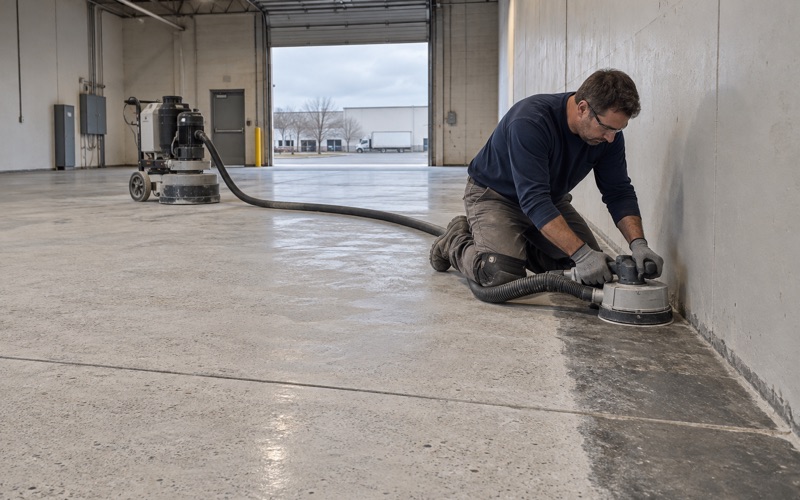
Before any resin is mixed, we open the slab with a diamond grinder or a shot blaster to a measured profile, never with an acid etch. We test for moisture as part of the written scope, before the price is final. Then the proposal names the product line, the coat count and the finished thickness, so you can hold the completed floor up against the quote.
That applies whether the job is a two-car garage or a commercial kitchen. What changes from one building to the next is the system, and in a place where hot liquid hits the floor every working day, the usual answer is not epoxy at all.
A Brewpub on Dixie Highway With Two Brewing Systems
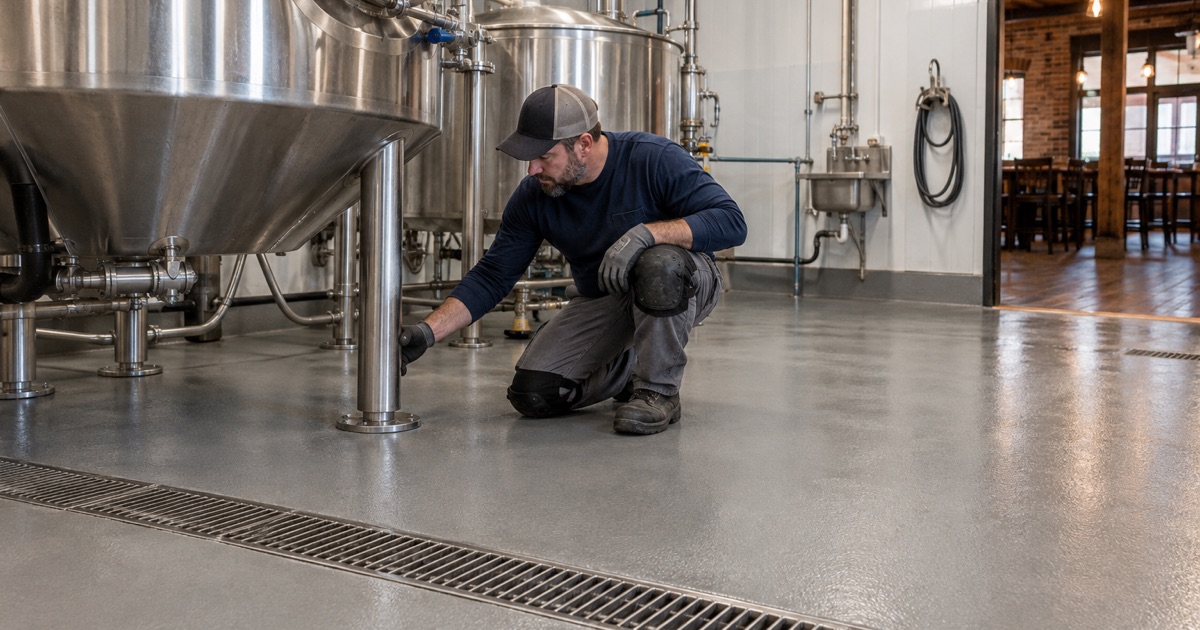
Homewood Brewing Company is a useful example because its setup is public. The brewpub at 18225 Dixie Highway broke ground in 2023 in the space that used to be Bogart’s, and the ribbon cutting came on Friday, October 18, 2024. The owners describe a stalwart main brewing system plus a second system for small-batch beers, along with an in-house smoker at the heart of the kitchen.
We have not seen the floors inside, and we are not describing them. What makes the building worth discussing is its layout: the village’s project description listed a brew house, a full-service kitchen, a dining room and outdoor seating, all under one operation.
Homewood is a Cook County village of 19,463 people at the 2020 census, 22 miles south of downtown Chicago, and its own downtown runs along Dixie Highway and Ridge Road. The village also has Metra Electric and Amtrak service.
Why a brewhouse is the hardest room
A brewhouse floor takes hot water from hose-downs, spilled wort straight off the kettle and the caustic and acid cleaners that clean-in-place systems run through tanks and lines. Each of those lands on the concrete at a temperature or chemistry a garage floor never sees. Repeated every brew day, the stress adds up faster than foot traffic ever could.
That combination is why a brewpub makes a good teaching case. It is a restaurant wrapped around a small factory, and the factory half is where an ordinary coating gives out first.
Two systems, two sets of washdowns
A second small-batch system can mean more brew days, more transfers and more cleaning cycles in the same footprint. On a floor, that translates into more hot hose time and more chemical contact per week, concentrated around the kettles and fermenters.
When we scope a floor like that, we map where the hot work actually happens before choosing anything. The answer is rarely one product wall to wall.
Looking for epoxy-flooring closer to Alsip? See Epoxy-Flooring Services in Alsip.
Hot Water, Caustic and Thermal Shock: Why Epoxy Lets Go
Thermal shock is what happens when a surface heats or cools much faster than the material beneath it. Pour near-boiling water on a cold slab and the top layer expands before the concrete under it has caught up. If the coating and the concrete grow at different rates, the bond line between them carries all of that strain.
The strain also runs the other way when a cold rinse follows a hot one. A floor that cycles in both directions through a brew day fatigues sooner than one that only ever sees one temperature.
How an epoxy floor fails under heat
Standard epoxy expands at a rate significantly different from concrete, so a hot washdown pulls the two apart a little every time. Over many cycles the coating cracks, the cracks let water under the film, and sections debond and lift. One food-plant guide puts the service temperature of a standard epoxy near 140 degrees, which a kettle spill or a hot rinse can exceed.
This is not a defect in a particular brand. It is the material doing what it does, and one published case history from Stonhard describes exactly this: a failed epoxy system in a brewery batching room, replaced with a floor rated for thermal shock.
Why urethane cement stays put
Urethane cement is a troweled or broadcast system that sits much closer to concrete in how it expands and contracts. Because it moves with the slab instead of fighting it, it is the usual brewhouse specification wherever hot water, steam and sudden temperature swings are routine. The same food-plant guide puts urethane cement at roughly 250 degrees, a published figure rather than anything we have tested ourselves.
Chemistry matters as much as heat. Brewery clean-in-place zones see caustic and phosphoric acid, so we check a candidate system’s published chemical resistance against the cleaners the operator actually uses, not a generic chart. A floor that survives the heat can still soften under the wrong chemical.
Preparation matters more under heat
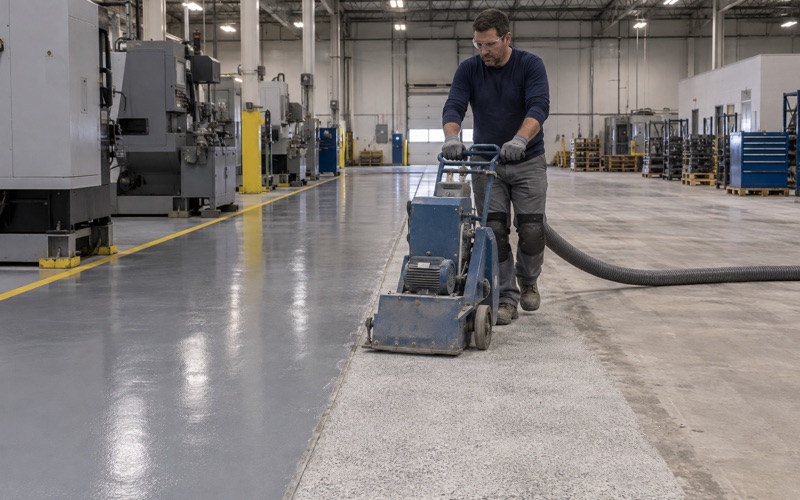
A heat-rated system still depends on its bond. We prepare to the concrete surface profile in the ICRI CSP range the product sheet calls for, and we map cracks, spalls and old coatings first. If a slab needs repair or replacement before it is coated, we say so in writing.
Grinding dust is captured at the machine by a vacuum rather than washed toward a drain. In an occupied food building, that keeps the prep work from becoming a cleanup problem of its own.
One Building, Three Floors: Brewhouse, Kitchen and Dining Room
A brewpub rarely needs the same floor in every room, and paying for brewhouse-grade urethane cement under dining tables is money spent on a problem those tables will never have. Zoning the building by what each room endures keeps the heavy system where it earns its cost.
The brewhouse
This is the urethane cement zone: kettles, fermenters and anywhere hoses run hot. We specify a broadcast texture so the floor keeps grip when it is wet, and we choose that texture by the aggregate and topcoat used rather than by a slogan.
Quartz aggregate is a common choice for that broadcast because it holds an even profile under a sealing coat. We also plan the cure around the brew schedule, since a working brewhouse rarely wants to sit idle.
The smoker kitchen
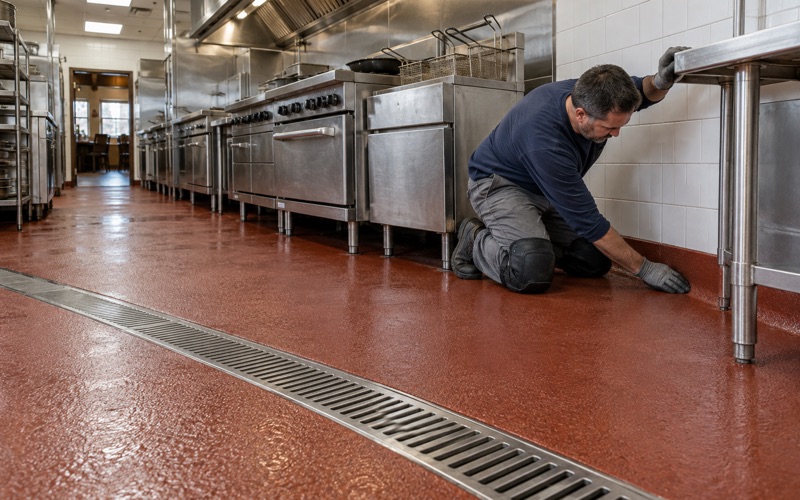
A commercial kitchen brings grease, hot pans and constant mopping, and it answers to food-code rules on cleanable floors. FDA Food Code 6-201.13 calls for coved, sealed junctures where the floor meets the wall, and 6-201.11 carves out an exception that allows antislip surfaces where safety calls for them.
Whether the kitchen gets urethane cement or a heavier epoxy depends on how much hot water and cookline heat actually reach the floor. The operator confirms with Cook County and the village which agency reviews kitchen plans before work is scheduled, and we build to what that review requires.
Dining room and back-of-house
Out front, the floor has a different job: foot traffic, chair legs, spilled beer at room temperature and a look that suits the room. A 100% solids epoxy with a decorative broadcast or a polyaspartic topcoat can handle that well, and it usually costs less than carrying the brewhouse system through the whole building.
Back-of-house storage and corridors sit in between, and we size them by what rolls across them, from keg dollies to hand trucks. Where a space has to keep serving, we phase the work into overnight or weekend windows so the dining room does not have to close for a coating.
Where one system meets the next
Where the brewhouse system meets the next floor, the change in material is a joint that has to be planned rather than left to chance. Urethane cement is normally terminated into a saw-cut keyway so its edge is anchored in the slab instead of feathered out, which is where a thin edge would otherwise start to peel.
Hot Water and a Garage Floor at Home
Homewood is a village of homeowners: 5,789 of its 7,082 occupied homes are owner-occupied. For most of them the floor in question is a garage or basement, and the brewhouse lesson scales down further than people expect.
Hot tires and hot hoses
A car pulled in after a long drive parks hot tires on the coating, and a thin or poorly cured film can soften and lift where they sit. That is hot tire pickup, and it is a smaller cousin of the brewhouse failure: heat concentrated at a few points, pulling at the bond.
Homeowners who wash a car or a floor with hot water from a utility sink create the same kind of temperature swing on a smaller scale. A full-build 100% solids epoxy base with a polyaspartic or polyurea topcoat, laid over a properly profiled slab, handles that better than a one-day roll-on kit.
Salt, cure and timing
Winter adds rock salt and calcium chloride brine riding in on tires, so we choose garage systems that hold up to deicers rather than ones that only look good in a showroom. Cure is scheduled by slab temperature and dew point, not the calendar, and an unheated garage in deep winter is told to wait.
Basements need a moisture reading before anyone talks about color. Ridge Road follows the sandy beach line of prehistoric Lake Chicago while the village as a whole sits on limestone near Thornton Quarry, so we test each slab with ASTM F2170 probes or an ASTM F1869 calcium chloride test rather than assuming.
Contracts, permits and warranties
Home jobs over the state threshold get a written contract and the Illinois Home Repair: Know Your Consumer Rights pamphlet before grinding begins. Illinois issues no state flooring license, so we check Homewood’s own contractor registration, bond and insurance terms before booking, and we ask the Community Development Department at 2020 Chestnut Road whether a slab repair needs a permit under Municipal Code Chapter 22.
Before the job is sold, we walk through what the coating warranty leaves out, and moisture is the first exclusion we name. A coating is also not flood protection, and we never sell one as radon reduction, which Illinois treats as licensed mitigation work.
Whether the floor is a brewhouse on Dixie Highway or a two-car garage off Ridge Road, the decision runs the same way: measure what the floor will face, then choose the system. Heat is the variable most people forget to ask about.
- 20+ Years Coating Floors
- Moisture Test in Every Scope
- Free Written Estimates