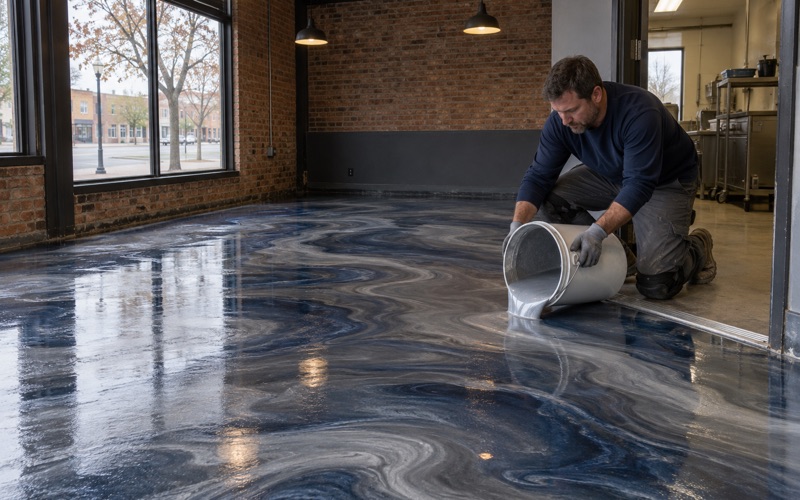
Tinley Park Epoxy Flooring has spent more than 20 years installing epoxy flooring in Crestwood and across the south suburbs, and the jobs that teach us the most are the ones where the floor has to protect something valuable sitting on top of it. A storage room full of bottled product asks different questions of a coating than a two-car garage does.
On those floors we think about two things before we pick a resin. The first is what a spill does to the concrete underneath once it gets past the surface. The second is what the coating itself releases into the room while it cures, because a room full of stock cannot simply be aired out for a week.
This page walks through how we handle both, from a commercial storage floor down to a basement wine rack. It covers how we open the slab, which systems we reach for when odor matters, how we schedule around inventory that cannot leave, and what a Crestwood homeowner should expect before we set a single bucket down.
An Italian Wine Importer on Kostner Avenue

A storage floor with a specific job
Crestwood’s list of registered businesses includes Rose Importing & Distributing, an importer of wine and spirits at 13959 S. Kostner Avenue. The company was founded in 1999 by Joseph Talarico, a native of Rose in Calabria, and its portfolio describes it as a holder of a federal basic permit for importation and wholesale and an Illinois foreign importing distributors license.
We mention it because a business like that shows clearly what a storage floor is really for. We have never worked on that building and have not seen its floor, but the logistics the company publishes describe exactly the conditions that shape how any wine storage floor in the village should be coated.
Reefer containers at 58 degrees
According to the company’s 2019 portfolio, its wines travel from Italy in temperature-controlled reefer containers held at a constant 58 degrees and are received at the Crestwood warehouse. Wine shipped with that much care is not moved casually once it arrives, and a room kept cool for its contents stays cool for weeks at a stretch.
That matters to a coating crew. A cool, steady room changes how long a resin takes to harden, and the stock that lives there is the reason the room exists. We plan the cure around the actual slab temperature we measure in that space, not around a number printed on a product sheet for a warm shop.
Mixed pallets and the dropped case
The same portfolio describes a two-business-day lead time to palletize mixed-pallet cross-dock orders at Crestwood. Building a mixed pallet anywhere means cases are picked, stacked and shifted by hand and by pallet jack, which puts wheel loads, turning tires and the occasional dropped case on the floor every working day.
A dropped case is the moment a wine floor earns its coating. Glass breaks, wine spreads, and whatever it reaches first is what it will start to work on. In a picking aisle that is usually the floor, so the floor needs to be sealed, continuous and easy to squeegee clean once the glass is swept up.
Looking for epoxy-flooring closer to Markham? See Epoxy-Flooring in Markham.
Wine Is an Acid and Concrete Is Not
Why a broken bottle matters to bare concrete
One manufacturer of wine-industry floor systems puts the problem plainly: concrete is an alkaline material, and over time any contact with an acidic substance results in chemical damage. Wine is acidic. On bare or merely sealed concrete, repeated spills slowly etch the paste and loosen the fine aggregate at the surface.
The trade has documented this in production spaces as well. At one Australian winery, acid from wine was found to be corroding the production and crushing floors, which also took caustic cleaning, dropped equipment and forklift traffic, and a resin coating system was chosen. A storage room sees far less volume, but the chemistry is the same.
Opening the slab so the coating holds
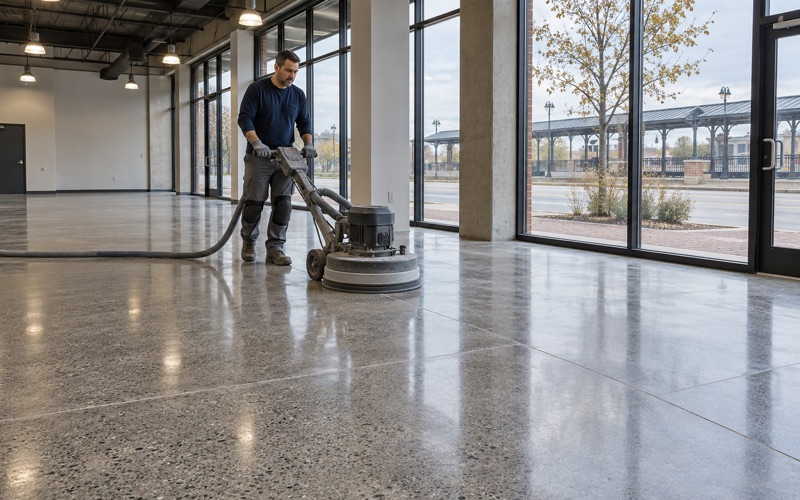
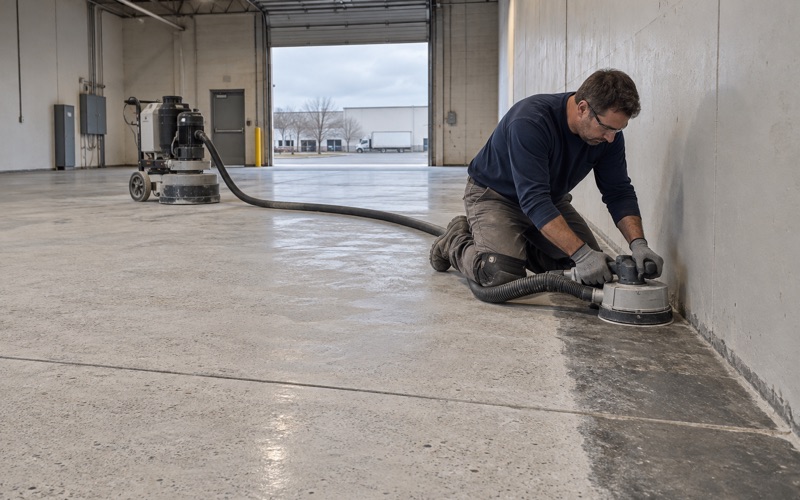
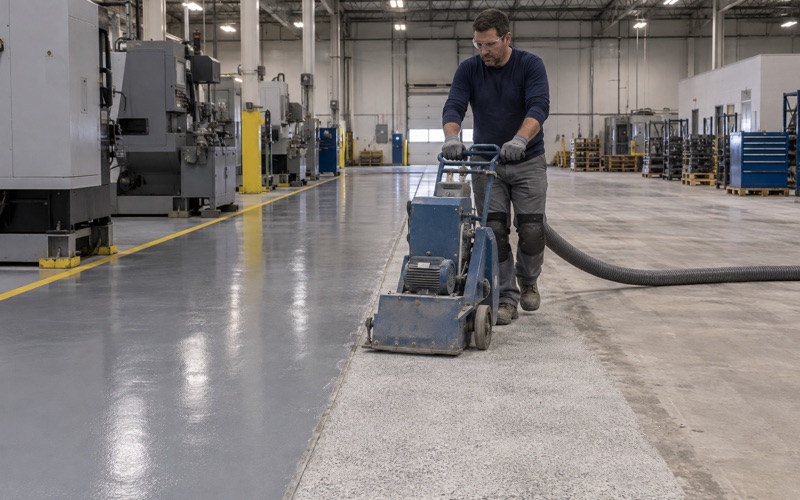
A coating only protects concrete it is truly bonded to. We open every slab with a diamond grinder or a shot blaster, never an acid etch, and aim for the ICRI concrete surface profile the chosen system calls for. Grinding dust is pulled into a vacuum at the machine rather than washed toward a drain.
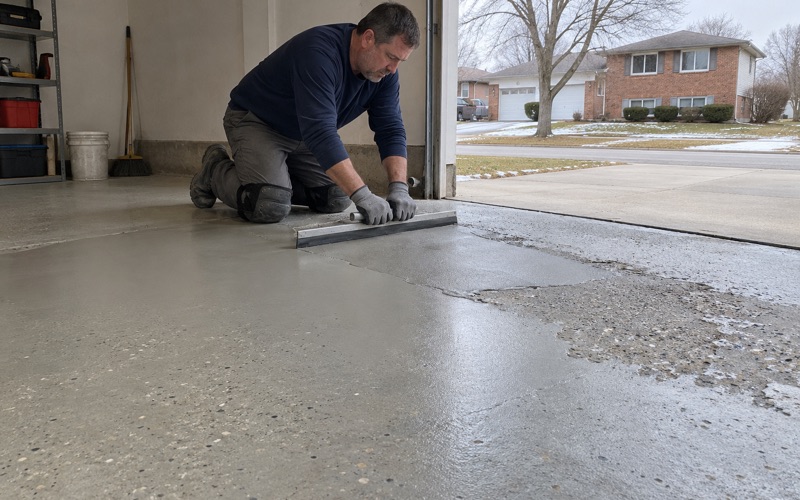
Before we price the job, we map cracks, spalls and any old coating, and we tell you when a section needs repair first. Then we usually build the floor with a 100% solids epoxy base and a chemical-resistant topcoat, with joints and wall edges detailed so wine has no open seam to run into.
A finish that stays safe when it is wet
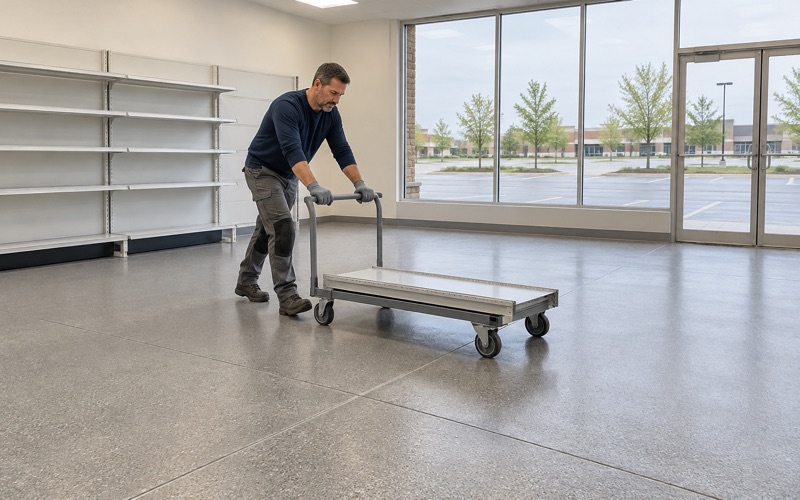
A wet coated floor can be slick, and spilled wine is only half the story when a mop and bucket follow it. We specify slip resistance by the broadcast and topcoat we actually install, typically a quartz aggregate broadcast locked in by the topcoat, rather than describing a floor as nonslip and hoping it performs.
The texture is a balance. Too coarse and a squeegee leaves wine and broken glass behind in the profile; too fine and a wet aisle loses its grip under a worker’s boots. We set the texture to how the room is cleaned and show you a sample before the full floor goes down.
Non-Tainting Systems and Coating Around Stored Product
What non-tainting means for wine
That same manufacturer sells floor systems described as solvent free and non-tainting, and others as non-tainting and low odor. The concern is simple. Strong solvent odor from a curing coating can travel through a closed room, and stored product sits in that air for as long as the smell lingers.
So on a floor where wine or other sensitive goods are kept, we choose the system for what it gives off as much as for how it wears. We name the exact product line, the number of coats and the finished thickness in the proposal, so you can check what was installed against what was quoted.
Low-odor, solvent-free choices
Our first choice in an occupied storage room is a low-odor, solvent-free system rather than a solvent-borne product that has to vent for days. Every coating we use also falls inside the Illinois VOC limits for floor and industrial coatings, which apply to the person applying them and not only to the manufacturer.
Low odor does not mean no odor, and we say so up front. We talk through how much of the stock can be moved, how much can be sealed or covered, and how the room will be ventilated during the cure, so the decision about the product rests with the owner of the inventory.
Working around inventory that cannot leave
In a temperature-controlled room, the cool air and the stored stock both shape the schedule. We usually phase the floor in sections, clearing one bay at a time while racks and pallets shift to the finished side, and we work overnight or across a weekend when the floor cannot stop picking orders.
Cure times follow the slab temperature we measure rather than the calendar. A cool room adds hours before foot traffic and longer before pallet jacks return, and we build that into the plan before the first bay closes rather than discovering it the morning stock is supposed to move back in.
Wine Racks and Storage Rooms in Crestwood Basements
The basement slab comes first
Many homeowners keep wine in a basement corner or a small storage room, and much of the village’s detached housing dates from the 1950s through the 1970s. Older basement slabs often carry old paint, adhesive or patched cracks, and moisture coming up through the concrete is the most common reason a coating fails there.
That is why a moisture test sits in our written scope before the price is final. Depending on the slab we use an ASTM F2170 relative humidity probe, a calcium chloride test, or a plastic sheet test as a first screen, and if the numbers call for it we add a moisture-mitigation primer. Moisture is also the first exclusion we explain when we go over the warranty.
Racks, spills and a cool room
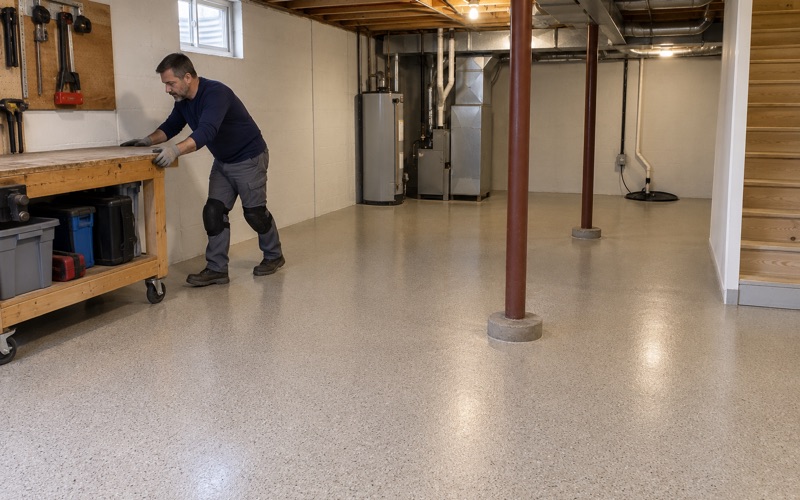
A basement wine rack puts point loads on the floor through its feet, and a dropped bottle down there does the same thing it does in a warehouse. A seamless, chemical-resistant coating keeps that spill on the surface where a towel can lift it instead of letting it soak into porous concrete and leave a stain.
Cool storage rooms also need a little patience. We check the slab temperature before we mix anything, and we may suggest a lower-odor system in a basement that shares air with the rest of the house. A home job over the state threshold gets a written contract and the Illinois consumer-rights pamphlet before grinding begins.
Before the crew arrives in Crestwood
The Village of Crestwood requires every contractor to register before working in town, with a general contractor fee of $100, a subcontractor fee of $25, and a certificate of insurance naming the village as additional insured. We complete that registration before we book the work, since Illinois issues no state license for flooring or coatings contractors.
The village’s permit page lists painting and carpeting as exempt but does not mention floor coatings either way. When a project raises that question, we ask the Building and Zoning Department at 13800 S. Cicero Avenue directly rather than assume. Some Crestwood addresses carry a 60445 ZIP, so we go by the village boundary, not the ZIP, to confirm which building department applies.
- 20+ Years Coating Floors
- Moisture Test in Every Scope
- Free Written Estimates