Tinley Park Epoxy Flooring brings more than 20 years of epoxy-flooring in Brookfield and the surrounding region to floors that are expected to do real work. A collision shop’s frame bay is the clearest case we know. The concrete in that bay is not only something to stand on; it is part of the straightening equipment.
That changes what a coating is for. In a bay where hydraulic towers pull against the slab, the resin is a wear and cleaning surface laid around the hardware, and it never carries any of the load. Our job is to finish the floor without getting in the way of the anchors, and to tell an owner plainly when the concrete under them needs attention first.
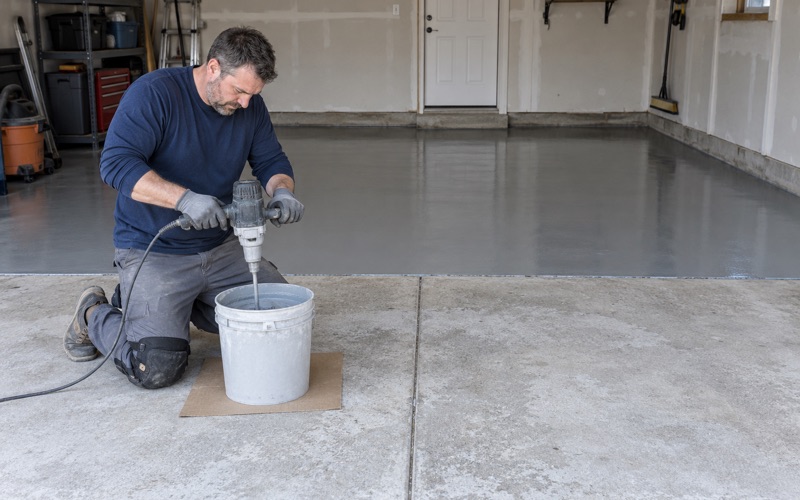
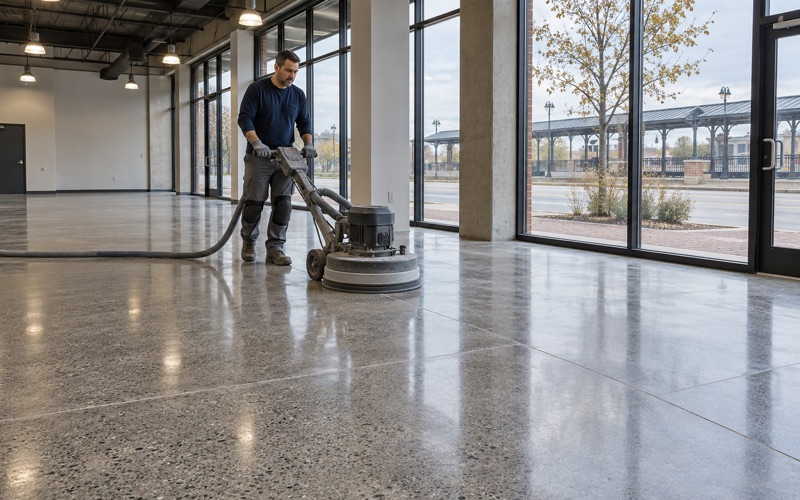
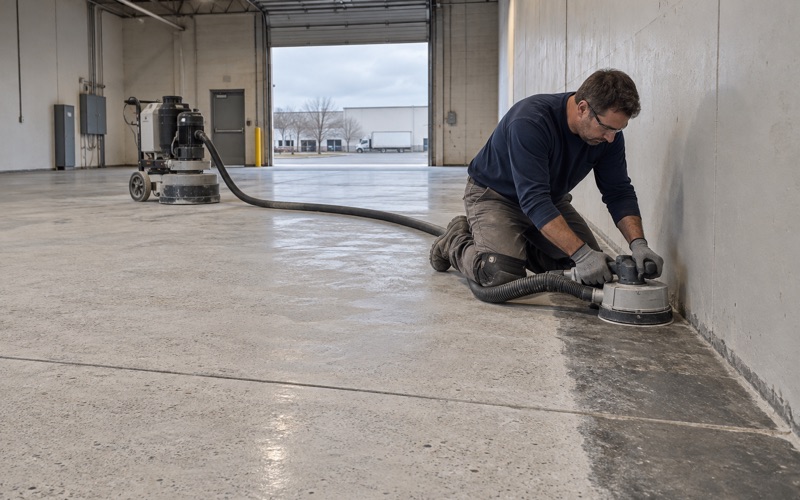
Every slab we coat is opened mechanically with a diamond grinder or a shot blaster rather than an acid etch. Cracks, spalls and old coatings are mapped before we price anything, and a moisture test sits inside the written scope. The proposal names the product line, the coat count and the finished thickness, so the floor can be checked against the paper.
Frame Straightening on Ogden Avenue
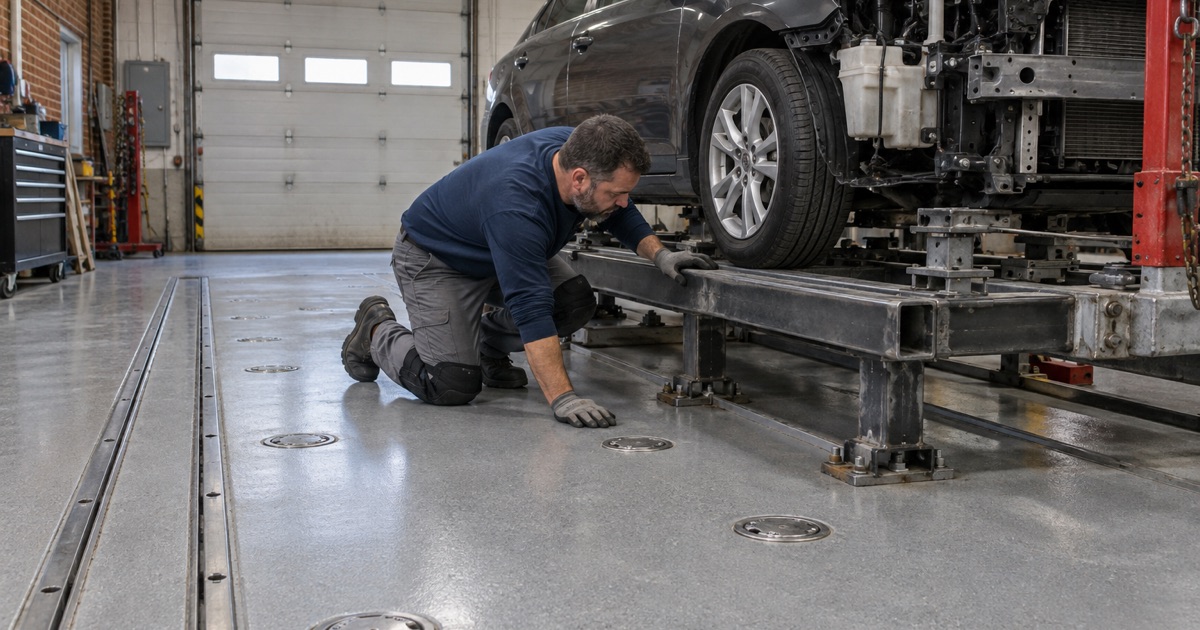
Brookfield’s stretch of Ogden Avenue carries a cluster of collision shops. CARSTAR Scola’s Collision Center sits at 9110 Ogden, J & F Auto Rebuilders at 8853 Ogden advertises work up to complete frame-off repair, and Central Auto Rebuilders operates at 8929 Ogden Avenue. Wrecked cars get straightened on this road, and that work starts at the floor.
Central Auto Rebuilders at 8929 Ogden
Central Auto Rebuilders is family owned and has been in Brookfield since 1981. The shop lists state-of-the-art equipment for frame and unibody measuring and repair, along with I-CAR Gold Class standing and 24-hour towing and recovery. It does not publish which frame machine it runs, or whether that machine pulls from anchor pots or a bench.
We mention the shop because it shows what this corridor does, not because we have worked on its floor. We have not seen the bay, and nothing here describes it. What follows is how frame-bay floors work across the trade, and what that means for anyone coating one.
Ten Tons Pulling on the Slab
Trade guidance on frame equipment notes that most machines use 10-ton hydraulics. In a floor-anchored setup, the tower or chain pulls against pots set into the concrete, and the slab resists that pull with its own mass and strength. A trade writer described drilled pots with a wedge that spreads the force over about a 6-foot radius.
That spread is the concrete doing structural work. A thin film of epoxy or polyaspartic on top adds nothing to it, and no honest installer should suggest otherwise. The coating’s role is to make the bay easier to sweep, to resist fluids and to mark the work area, while the slab carries the pull.
Checking the Slab Before the First Pull
Before we coat a frame bay, we walk the slab around each anchor location and map what we find. Radial cracks running out from a pot, hollow-sounding patches when tapped, spalled edges at a rail and settlement near a joint all get recorded. A coating would hide every one of those, which is the opposite of what a shop needs.
When the concrete around an anchor looks compromised, we say so and recommend the shop involve its equipment supplier or a concrete contractor before any coating goes down. Some slabs need repair or replacement first, and we would rather lose the job than seal a problem under a glossy finish.
Looking for epoxy-flooring closer to La Grange Park? See Epoxy-Flooring in La Grange Park.
Anchor Pots and In-Floor Rails
Floor anchoring comes in two common forms: individual pots drilled into the concrete, and in-floor rail systems set into channels. Both put permanent hardware into the slab, and both shape how a coating can be laid around them.
Drilled Into Cured Concrete
Anchor pots drilled into the floor were the industry standard for many years, according to a 2011 BodyShop Business piece on buying frame machines. The advice was to pour the cement floor first, then core holes with a 3-1/2 inch concrete hole-saw. Pots cast in place during the pour, the writer noted, do not have enough surface contact to resist being pulled out by 10 tons of hydraulic force.
For us, that sequence matters because it means the pots usually arrive after the slab has cured. A bay may have been cored years after the floor was poured, which makes the condition of the concrete around each hole a separate question from the rest of the floor.
The Manufacturer’s Pattern
Pots go in the exact pattern the equipment manufacturer suggests, because the towers and chains are designed around that geometry. A shop that changes machines may end up with old pots left behind alongside a new set. We map every pot, live or abandoned, before we plan the coating layout.
Abandoned pots can be capped, filled or left open, but that decision belongs to the shop and its equipment supplier rather than to us. Once the owner decides, we detail the coating to match, so nothing about the floor finish forces a choice about the anchors.
Rails and Their Clean-Out Covers
In-floor rail systems run channels across the bay rather than relying on single holes. Those rails use clean-out holes or snap-on covers to keep them from filling with shop dust and dirt. A coating cannot be allowed to change that, so covers still have to seat and the clean-outs still have to open.
Grinding dust is the other worry around a rail. We capture it at the machine with a vacuum rather than sweeping or rinsing it, which keeps fine concrete powder out of the channels and away from any floor drain.
Old Coatings in an Existing Bay
An existing bay may already carry a worn paint or epoxy, often chipped around the anchors by chains and towers. We map those coatings first and remove them by grinding, since a new system laid over a failing one inherits every weak bond underneath. Around each pot, the old film has to come off down to sound concrete before any new edge is cut in.
That removal also shows the concrete at each rim clearly for the first time in years. If the grind exposes cracking or a loose pot, the coating waits until the shop has dealt with it.
Coating Around Pots and Rails Without Filling Them
The finished floor has to meet every anchor flush, without bridging over an opening or running down into it. That takes more hand work than an open garage slab, and it is where a frame-bay job earns or loses its keep.
Masking and Cutting In
Before grinding, each pot opening and rail channel is plugged or masked so resin and dust stay out. The grinder profiles the field of the floor, while edge tools work the concrete right up to the steel without nicking it. The aim is a consistent ICRI concrete surface profile from wall to anchor rim.
During the coat, the resin is cut in by hand around each opening and pulled back before it can creep over the lip. Masks come out while the material is still workable, so the edge stays crisp instead of tearing as it cures.
Flush, Not Built Up
A coating that stands proud of a pot rim catches a chain hook or a creeper wheel, and the edge starts to lift. We keep the build thin at each anchor and feather it to sit level with the hardware. Where a broadcast of vinyl flake or quartz aggregate is part of the system, the broadcast stops short of the openings.
The texture itself is set by the broadcast and topcoat we specify, not by a promise. A frame bay sees spilled coolant and washwater, so slip resistance is part of the written scope rather than an afterthought.
Chemistry Choices for a Working Bay
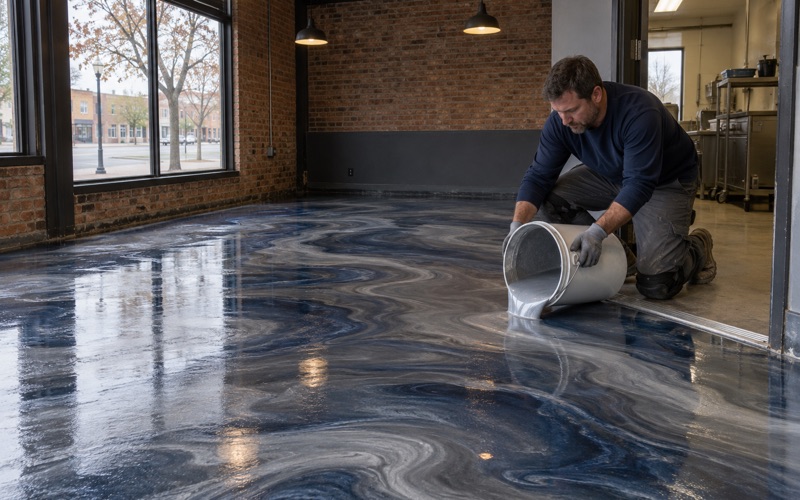
Bays like these see brake fluid, coolant and solvent wipe-downs alongside the usual traffic. A 100% solids epoxy base under a polyaspartic or polyurea topcoat is a common pairing, and the proposal names the product line, coats and thickness. We pick from products within the Illinois VOC limits for floor coatings, which apply to whoever does the applying.
Cure is scheduled to the slab temperature and dew point, not the calendar. A shop that works weekdays can often give us a weekend, and we plan coat timing so the bay is ready when the doors open again.
Engine Hoists, Come-Alongs and Anchors at Home
Frame bays are a shop matter, but a home garage can host a smaller version of the same forces. An engine hoist, a come-along hooked to an eye bolt or a homemade pulling post all ask the slab to resist a load.
Anchors in a Residential Slab
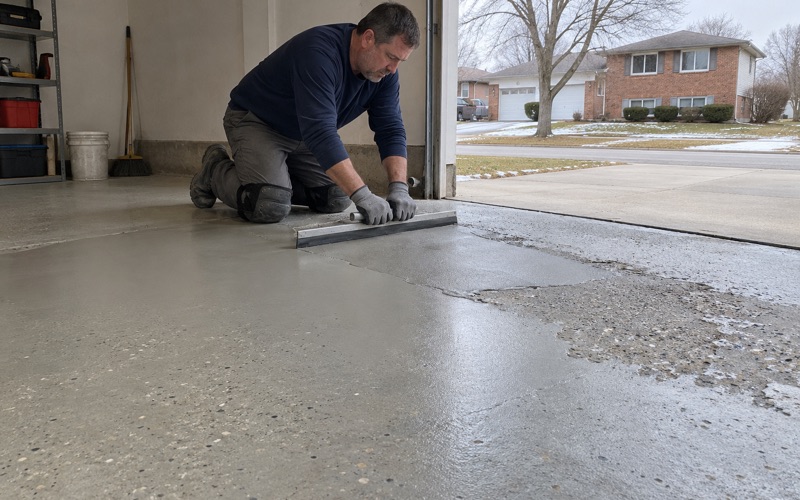
A residential garage slab was not designed around anchor pots, and drilling one in does not make it a frame bay. If a homeowner plans to anchor a come-along or post, we suggest settling the location and hardware before the floor is coated. Drilling through a finished coating later invites chipping at the hole.
As in a shop, the coating adds no holding power. We detail it flush around any anchor already in place and leave the question of what the concrete can take to the person who installed it.
Hoist Casters and Point Loads
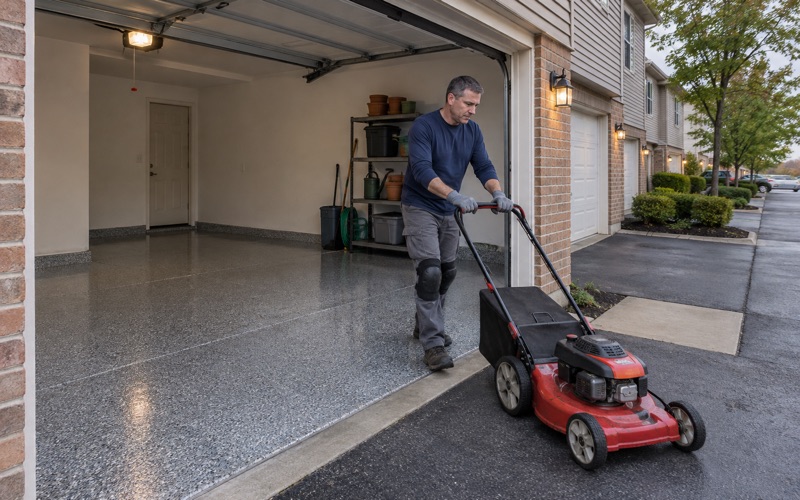
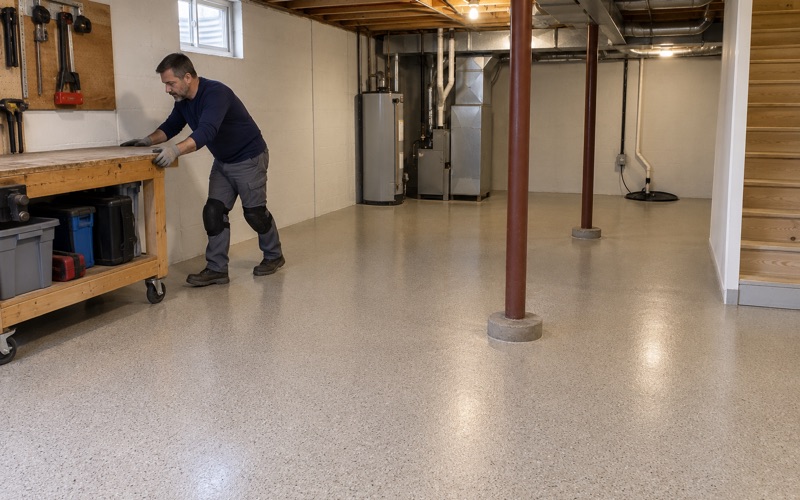
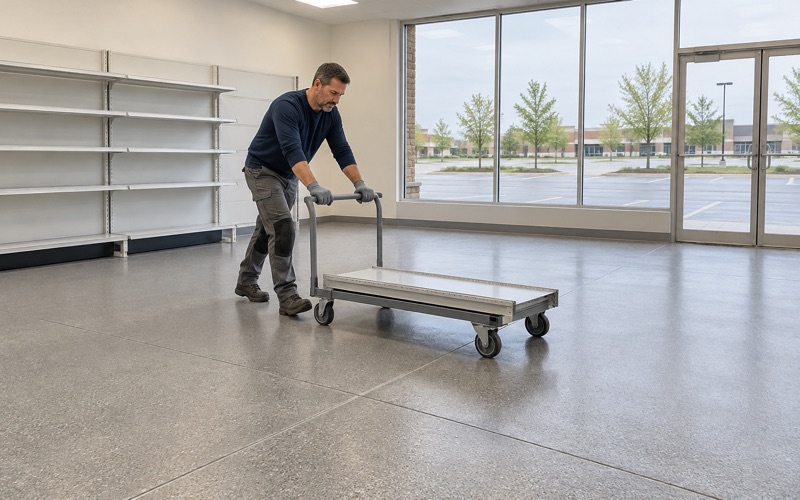
A loaded engine hoist rolls on small steel casters that press hard on a small area of floor. Over a thin or poorly bonded coating, that can dent or peel the film, so we steer garage owners toward a full-build system over a properly ground slab. Rolling heavy loads slowly over a coated floor helps any system last.
Hot tire pickup is the other common garage complaint, and it usually traces back to weak prep or the wrong topcoat. Grinding to a real profile and choosing a topcoat that tolerates hot tires and winter brine covers most of it.
Moisture and Winter Timing
Every garage proposal includes a moisture test before the price is final, using methods such as the ASTM F2170 in-situ relative humidity probe or the ASTM F1869 calcium chloride test. We explain what the warranty does not cover before anything is signed, and moisture is the first exclusion we name. An unheated garage in deep winter is told to wait for conditions that let the resin cure.
Home jobs above the state threshold get a written contract and the Illinois Home Repair: Know Your Consumer Rights pamphlet before any grinding starts. That paperwork gives a Brookfield homeowner a clear record of what was promised for the floor.
- 20+ Years Coating Floors
- Moisture Test in Every Scope
- Free Written Estimates